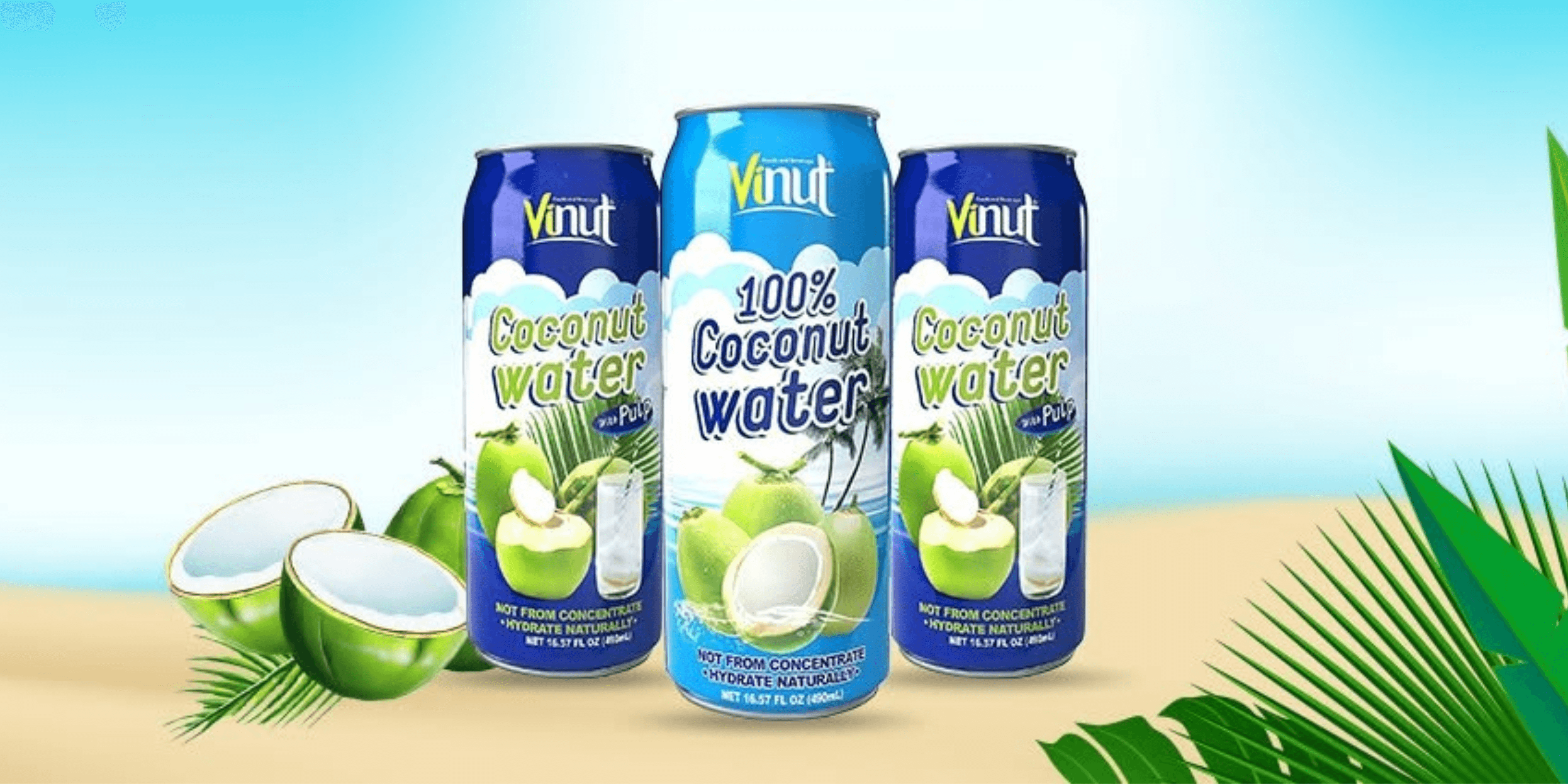
Which VINUT coconut water should you try first? Start with the experience you want: a straightforward coconut-water option, a drink with coconut pulp for extra texture, or a coconut-water blend with a fruit flavour. Then compare the exact product names and labels rather than assuming every can has the same ingredients.
The VINUT META coconut water collection includes several can sizes and named variations. This guide uses three published product listings to help you narrow your choices. It does not assume that every listed product has the same nutritional profile or is available in every market.
1. Read the exact product name
The most useful first step is to read beyond the words “coconut water”. Look for the rest of the name: “100%”, “with pulp”, a fruit such as lychee, or a specific processing term. These words identify how a product is presented, but the full ingredients and nutrition panel are still the right place to check what is inside.
For example, the catalogue lists Vinut 100% Coconut Water in a 490 mL can. It also lists Vinut Coconut Water with Pulp, NFC in a 250 mL can and Vinut Lychee Coconut Water with Lychee Juice in a 330 mL can. They are three distinct listings, not three pack sizes of one identical recipe.
Treat a product title as a starting point. If you are choosing for someone with dietary requirements, check the actual label for the version sold in your market. If that information is missing online, ask for the current product documents before relying on a claim.
2. Compare original and pulp options
If you prefer a simple, uninterrupted drink, start by exploring the listing without “pulp” in its name. If you enjoy pieces of coconut in a beverage, look at a can explicitly labelled “with pulp”. These are differences in the intended drinking experience, not proof that one option is healthier or contains more coconut.
Quick comparison: three published VINUT listings
The table compares the names and packaging shown in the VINUT META catalogue. It does not confirm the exact formula, sugar values, inventory or certified claims of any SKU.
Published product listing | Pulp named? | Can size | Choosing cue |
Vinut 100% Coconut Water | Not stated | 490 mL | Coconut-forward listing |
Vinut Coconut Water with Pulp, NFC | Yes | 250 mL | For people considering pieces |
Vinut Lychee Coconut Water with Lychee Juice | Not stated | 330 mL | Fruit-blend listing |
A 490 mL can and a 250 mL can also represent different serving amounts. Compare drinks using the same amount, such as per 100 mL, only when the current nutrition panels actually provide comparable figures.

3. Explore coconut water with fruit flavours
Fruit-blended options create another path through the collection. The site lists coconut water products named with lychee, mango and strawberry. Choosing among these is mostly about the flavour direction you want to explore, rather than a ranking of which drink is “best”.
One brief example is the 330 mL Vinut Lychee Coconut Water, Lychee Juice, No Sugar Added listing. The wording suggests a fruit-focused variation, but it does not tell you the amount of lychee juice, total sugars or exact ingredients without the current label. A “no sugar added” phrase should never be read as a promise of zero total sugar.
Start with a fruit you already enjoy, then check whether the drink is a blend or a flavoured beverage and what its ingredient list says. If you are choosing for a family gathering, a mix of coconut-forward and fruit-forward options may give guests more meaningful choice than several cans that differ only in size.
You can browse the complete VINUT coconut water collection to see the current product names and formats. A catalogue listing is not a confirmation of local stock in Kenya, South Africa or any other destination.
4. Check ingredients before comparing nutrition
The front of a can is useful for finding a flavour, but it is not a complete nutrition comparison. Before deciding between original, pulp and fruit blends, look for the ingredient list, total sugars, any added-sugars information, serving size and storage instructions on the exact pack.
A clear comparison uses the same measurement basis. For example, if one label shows information per 100 mL and another shows per can, convert only when all necessary figures are provided. Do not compare two different serving bases as though they were equal.
Likewise, the word “plant-based” does not mean “100% coconut water”, and “no added sugar” is not the same as “sugar-free”. Specific claims, including certifications and allergen information, should be checked on the label and applicable product documents for that destination market.
A quick label-reading checklist: confirm the full SKU and volume, read the ingredient order, check the nutrition basis, look for any relevant allergen statement, and follow the exact storage directions after opening. If a key item is absent, request the current label instead of guessing.
5. Build a short product list
For a first purchase or tasting plan, choose by three practical questions. Do you prefer a coconut-water style without pieces? Do you want the texture signalled by “with pulp”? Or are you more interested in a coconut-and-fruit combination? This gives you a useful shortlist before you look at sizes or labels.
A simple three-choice shortlist could start with the catalogue's 490 mL 100% Coconut Water listing, the 250 mL Coconut Water with Pulp NFC listing, and one of the 330 mL fruit-blend listings. Check the current product information for each rather than assuming their ingredients or sugar values are interchangeable.
Consider how you will serve them as well. For an individual drink, check the can volume and your preferred serving size. For sharing, think about whether people prefer plain pours or fruit-inspired options. Any serving ideas should respect the specific product's opening and storage instructions.
To explore more options, see the VINUT coconut water range and then open the individual listing that interests you. The choice is easier when you move from your preferred texture and flavour to the exact label, instead of starting with a broad health claim.
6. Frequently asked questions

Are all VINUT coconut drinks 100% coconut water?
No assumption should be made across the whole category. One listing is named “100% Coconut Water”, while other listings mention pulp, fruit juice or flavours. Confirm the formulation and percentage, if relevant, on the exact product label.
What does “with pulp” mean on a product label?
It signals that the product is presented with coconut pieces or pulp, which may change its texture compared with a drink without pieces. The actual amount and type should be confirmed on the relevant SKU information.
Can I compare two cans using only their names?
Names can help you shortlist flavours and formats, but they cannot establish a fair nutrition comparison. Read both labels, compare equivalent quantities, and check ingredients, sugars, and serving sizes.
Explore the VINUT coconut water collection to find the published product options and choose which exact labels to compare next.
For business
Stock this drink
Interested in offering this drink in your shop, café, or business? Share the product, your market, and the formats you want to discuss with our team.